Introduction
The sun is barely up, the jeep engine falls silent, and the whole world waits in anticipation. Just a few meters away, a patch of tall grass begins to move. Suddenly, a tiger emerges onto the dirt trail, looks at you, and walks by as if you don't exist at all. Moments like these make a wildlife safari truly unforgettable.
It is moments like this that make people fall in love with the Indian wilderness. However, India offers much more than tigers. For example, it is home to the world's last wild Asiatic lions, immense elephant herds, ancient rhinos, and snow leopards roaming the high peaks of the Himalayas. Additionally, its mangrove forests create fascinating landscapes where land meets the sea. Because of this incredible variety, very few nations can match India's diverse natural beauty.
Choosing where to begin, however, can be challenging. India has more than a hundred national parks and numerous wildlife sanctuaries, so finding the right destination takes careful planning. Therefore, in this article, we will explore the best national parks in India, discover what makes each destination unique, learn about the best times to visit, and share tips for planning a trip that keeps both you and the local wildlife happy.
Why India is an Ideal Destination for Wildlife and Nature Enthusiasts
Geography plays a major role in India's natural diversity. Snow-capped mountain ranges, deciduous forests, evergreen hill forests, flooded plains, salty desert regions, and wild coastlines support unique ecosystems of flora and fauna. As a result, every region offers a different travel experience. For example, Central India is known for its rich wildlife, while Assam offers lush grasslands and rhino habitats. Meanwhile, Kerala Nature Tour Packages allow travelers to explore green hills, dense forests, spice plantations, and beautiful backwaters, making Kerala an excellent destination for nature lovers.
This is how Nature Tourism in India has become one of the fastest growing trends in tourism. Where families who used to visit only hill stations and beaches go on holiday vacations for spending some time in the wilderness and wildlife lovers opt for a stay at forest lodges rather than going to crowded tourist resorts. Photographers travel from all across the globe just for a click of a leopard on the rock.
Wildlife Tourism in India also plays a role beyond the fun of the trip. Entry fees and safari permits help fund conservation and responsible tourism creates jobs for guides, drivers, cooks and homestay owners. When nearby villages benefit from protected forests they have a reason to protect them too.
Best National Parks in India for Tiger Safaris
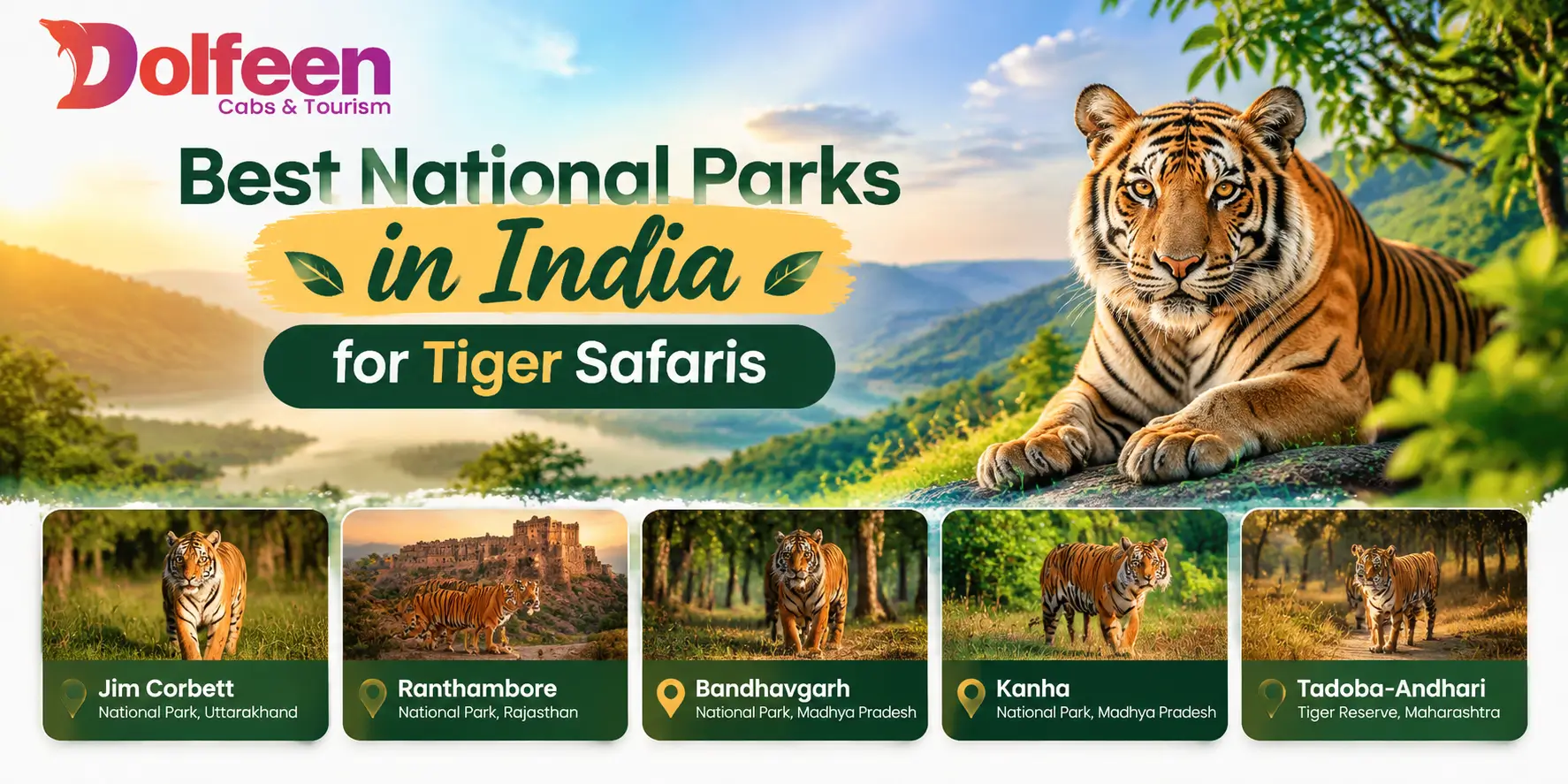
India boasts the largest number of tigers in the wild compared to anywhere else and a tiger sighting forms an essential part of a visitor’s wish list in the country. Here are some of the best locations for it.
Jim Corbett National Park, Uttarakhand
Set up in 1936, Corbett is India's oldest national park and was named after Jim Corbett, a hunter who later became a passionate conservationist. It sits in the foothills of the Himalayas, where sal forests, open grasslands, and the Ramganga river create a beautiful setting.
The park is divided into zones. Dhikala is the most famous zone, with wide grasslands and the opportunity to stay overnight in a forest rest house. In addition to tigers you can spot elephants, deer, crocodiles and more than 600 species of birds. Because it is a few hours drive from Delhi Corbett is a favourite, for quick getaways.
Ranthambore National Park, Rajasthan
One of the best places to spot tigers in the open in India is the Ranthambore national park. Dry deciduous forests with a low canopy density provide the right conditions for spotting tigers in the proximity of water bodies, ruins, and safari tracks.
It is the surroundings that make Ranthambore so unique – a historical fort towers above the forests, while remnants of the ancient buildings dot the forest landscape. Watching a tiger resting near an ancient ruin is an experience to cherish.
Bandhavgarh National Park, Madhya Pradesh
Bandhavgarh is known for having one of the tiger densities in India especially in its Tala zone. The landscape is a mix of hills, grassy meadows and thick sal forests with an old fort perched on a plateau in the middle.
Because tiger sightings happen often here Bandhavgarh is a choice for people going on a safari for the first time. You’re more likely to see a tiger so you don’t go home with nothing.
Kanha National Park, Madhya Pradesh
If you like endless expanses of green forest, then you will love Kanha. Its meadows, known as maidans, are bordered by high sal and bamboo trees, and the park is said to be a source of inspiration for the jungle scenes in Rudyard Kipling’s novels.
Kanha also deserves praise for its role in saving the endangered species hard-ground barasingha, a swamp deer. This is one of the best managed parks in India and an ideal place for a slow and peaceful safari.
Tadoba-Andhari Tiger Reserve, Maharashtra
Tadoba has gained recognition as one of the most frequented tiger reserves of western India. Forests open up at lakes and tigers can be seen coming out to drink in the warmer months.
Gir National Park: The Last Home of the Asiatic Lion
Asiatic Lions live in the wild at only one single place on earth – Gir National Park in Gujarat state. These majestic animals were near extinction almost hundred years ago; but with proper protection and support from the local community, the population has steadily increased to include areas far beyond the park limits.
The landscape of Gir Park is arid and consists of teak forests, hills, and seasonal rivers. Some of the other animals that can be seen in Gir Park besides the lion are leopard, spotted deer, sambar, nilgai, crocodiles near the Kamleshwar dam and lots of bird species.
Jeep Safaris operate twice daily and permits are obtained via the official online portal. During the winter season and holidays, the slots fill up very quickly; therefore, it would be advisable to book the slot right away. In case you are unable to get a permit, Devalia Interpretation Zone provides you with a shorter and fenced drive where chances of sighting the lions are very high.
During the monsoon Gir National Park closes, from mid‑June to mid‑October. The best time to visit is between December and March when the weather's nice and the dry forest makes it easier to spot Asiatic lions. Many travelers find it convenient to book a Sasan Gir Tour Package.
Many travelers find it simpler to book Sasan Gir Tour Packages, which usually bundle the stay, safari booking help, and road transfers. Good Gir National Park Tour Packages also add nearby stops such as Junagadh, the Girnar ropeway, Somnath, or Diu, turning a safari into a well-rounded holiday.
Gujarat Wildlife Tourism Beyond Gir
Gujarat Wildlife Tourism goes beyond Gir. Lions might be the attraction but Gujarat Wildlife Tourism has much more to offer if you have a few extra days.
Velavadar Blackbuck National Park: Close to Bhavnagar these open grasslands are filled with groups of blackbuck and in winter you can also see wolves and harriers.
Wild Ass Sanctuary, Little Rann of Kutch: The sole habitat of Indian wild ass, which is a strong and swift runner through salt flats.
Marine National Park, Jamnagar: Low tides give an opportunity to go on a guided walk to see coral reefs and starfish and octopus in tidal pools.
Nalsarovar Bird Sanctuary: A shallow lake near Ahmedabad where various migratory birds like flamingos and pelicans come during the winter months of November to February.
All this proves that Wildlife Sanctuaries in India are very diverse even within one state.
Best National Parks in India for Rhinos, Elephants, and Mangroves
Big cats get most of the attention. Some of the country’s most memorable wildlife experiences have nothing to do with tigers or lions.
Kaziranga National Park, Assam
Kaziranga is home to the majority of the world’s one-horned rhinos. I have watched these massive rhinos graze in elephant grass often with egrets perched on their backs and it feels almost prehistoric. Kaziranga also has buffalo, elephants, swamp deer and a healthy number of tigers though tigers are harder to see in the thick grass.
Kaziranga is a UNESCO World Heritage Site and usually opens from around November to April. The Brahmaputra floods much of Kaziranga, during the monsoon, which keeps the grasslands rich but makes safaris impossible.
Sundarbans National Park, West Bengal
Sundarbans is the biggest mangrove forest in the world, lying in the delta of the rivers Ganga and Brahmaputra. In this park, safari is carried out through boat rides in the dense creeks surrounded with twisted roots.
Royal Bengal tigers exist here, but they are notoriously hard to spot. People visit here to experience the ambiance – the silence of the water, crocodiles sunbathing on the banks of the river, kingfishers flying here and there, and the watch towers viewing the entire forest. More than the animal sightings, people visit here to experience the wild nature of the place.
Nagarhole and Kabini, Karnataka
The forests around the Kabini river in Karnataka are among the places in India to see Asian elephants. This is especially true in the months when many elephants come together near the water. Nagarhole National Park is also known for leopards, dholes and for the chance to see a black panther. Boat safaris on the Kabini backwaters give visitors a different experience.
Together these three parks rank high among the wildlife destinations in India. They offer variety for people who want more than big cats.
Kerala and the Western Ghats: Green Escapes for Nature Lovers
If you enjoy mist-covered hills, spice plantations and leisurely treks under shady trees then Kerala is definitely a destination you should not miss because Western Ghats of this region boast some of the most bio-diverse areas in the world.
Periyar Tiger Reserve, Thekkady
The Periyar is famous for boat safaris on Periyar Lake that are frequented by elephants, gaur and sambar that can be seen coming down to quench their thirst from the lake shore. Alongside there are nature walks, bamboo rafting and border treks conducted by qualified local guides.
Eravikulam National Park, Munnar
Nearby Munnar is Eravikulam National Park which is known for protecting the Nilgiri tahr which is a mountain goat species found only in the Western Ghats. The grasslands and pleasant weather conditions make this park a delightful half day visit although it is closed for some months of the year during the calving period of the Nilgiri tahrs which occurs early in the year.
Kerala tour packages often combine Periyar, Munnar, and the Alleppey backwaters into one trip, making them ideal for families and couples who want to enjoy nature without rushing. While exploring the region, travelers can discover the Best Places to Visit in Munnar, including its lush tea plantations, mist-covered hills, scenic viewpoints, and beautiful natural landscapes.
Mountain Parks: The Best Places to Visit for Nature Lovers
For travelers who love high altitudes and dramatic scenery, India's mountain parks are some of the Best Places to Visit for Nature Lovers.
Valley of Flowers National Park, Uttarakhand
Tucked high in the Garhwal Himalayas, this UNESCO-listed valley bursts into colour during the monsoon, with hundreds of species of wildflowers carpeting the slopes. It is open from June to October and July. August is the best month to see the flowers. Getting there requires a trek so you need to be in shape.
Hemis National Park, Ladakh
Snow leopards are among the most elusive animals to find anywhere and one of the Best Places to Visit for Nature Lovers to do so is Hemis National Park. Winter treks from January to March are extremely difficult and cold.
Best National Parks in India by Season: When to Plan Your Trip
Timing can make or break a wildlife holiday. Here's a simple guide to help you plan:
October to March: Pleasant weather across most of the country. Great for Gir, Ranthambore, Kaziranga, Kerala, and Gujarat's bird sanctuaries.
April to June: Hot, but often the best time for tiger sightings in central India, as animals gather near water. Carry plenty of water and plan for early starts.
July to September: Many parks. Limit safaris during the monsoon. It's the time for the Valley of Flowers and lush forest drives in Kerala and south Gujarat.
January to March: The ideal period to trek snow leopards in Ladakh.
Most of the tiger parks in central India have an open season from October and close down by June-end every year. The opening periods may differ every year. Always remember to check the park update before you plan your trip.
How to Choose the Right Wildlife Tour Packages
Planning a safari on your own is possible. There are a lot of moving parts: safari permits, zone selection, lodge bookings and long road transfers. That's why many travelers prefer planned Wildlife Tour Packages.
Check What's Included
Ask whether the price covers safari permits jeep charges, the naturalists fee, meals and transfers. Some quotes look cheap. Leave out the safari itself which is often the biggest cost.
Pay Attention to Zones and Number of Safaris
Not all zones within a park are equal. A good operator will explain which zones are best for sightings and suggest at least three or four safaris since animals don't run on a timetable.
Pick the Right Kind of Trip
Some Nature Tour Packages focus on forests, hills and birdwatching while others focus on big‑cat sightings. Nature and Wildlife Tours that mix both are ideal for families with interests. If your goal is photography, look for longer Wildlife Safari Tours in India with experienced naturalists and full-day safari options.
Responsible Travel and Eco-Tourism in India
The forest we love to explore is fragile, and we have a certain responsibility towards maintaining their sanctity. Eco-Tourism in India is about exploring nature in its purest form in such a manner that the flora, fauna, and indigenous community is respected and conserved.
A few simple habits make a real difference:
Keep your voice quiet and never tell the driver to follow or surround an animal.
Wear muted colours like green, brown, or beige, and avoid strong perfumes.
Carry your own water bottle and bring all your waste back with you.
Follow the rules of the park about when to be where to go and how to take pictures.
Pick homestays, guides and places to eat that are owned by people whenever you can.
Remember that a Wildlife Safari in India is a special chance, not something you can count on. Some trips will be exciting. Others will be calm. Still the sounds of birds, the sunlight coming through the trees and the new marks on the path are all part of what makes the experience so meaningful.
Conclusion
In Gir, you can spot lions; meanwhile, Kaziranga is famous for its rhinos, Ranthambore for its tigers, and Ladakh for its elusive snow leopards. These are some of India's remarkable natural treasures. Additionally, the country's diverse landscapes include Kerala's green hills, the colourful valleys of the Himalayas, and the fascinating mangrove forests of the Sundarbans.
However, enjoying these destinations to the fullest depends on how well you organize your vacation. For example, you can choose just one or two national parks for your trip, visit during the right season, and reserve your safari permits early. Finally, leave enough time between destinations so you can travel comfortably and enjoy each wildlife experience without rushing.
There are national parks in India that are perfect not only for family vacations but also for romantic getaways and photography adventures. With Family Holiday Packages, you can explore beautiful forests, discover fascinating wildlife, and enjoy memorable experiences with your loved ones.
FAQs
1. Which is the best national park in India for spotting tigers?
Ranthambore, Bandhavgarh, and Tadoba offer some of the best chances, thanks to open forests and healthy tiger populations.
2. When is the best time to visit Gir National Park?
December to March is ideal. The park stays closed during the monsoon, usually from mid-June to mid-October.
3. Do I need to book safari permits in advance?
Yes, permits for popular parks fill up quickly, so book online through the official portals as soon as your dates are fixed.
4. Which national parks are good for families with children?
Periyar, Gir, Kanha, and Jim Corbett are great choices, with comfortable stays, easy safaris, and plenty to keep kids engaged.
5. How many safaris should I take in one park?
Plan for at least three or four safaris over two or three days to improve your chances of good wildlife sightings.